


Yes, coffee-stained teeth can be whitened. Teeth whitening for coffee drinkers works best when surface buildup is cleaned first, and deeper enamel stains are treated with the right whitening method. For patients with noticeable coffee discoloration, teeth whitening can improve tooth shade safely when it is planned by a dentist.
Coffee stains often return because coffee is consumed daily, not because whitening has failed. The key is choosing the right whitening option, keeping up with oral hygiene, and knowing which habits can darken teeth again after treatment.
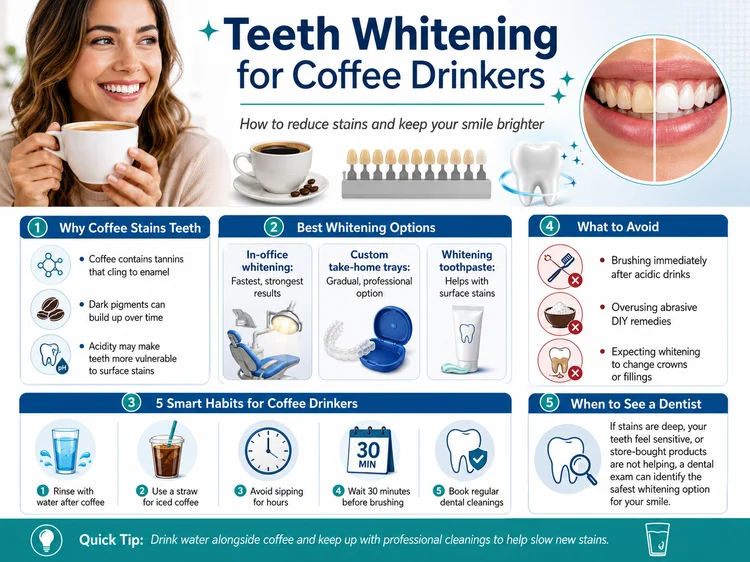
Teeth Whitening for Coffee Drinkers
Coffee drinkers often notice staining near the gumline, between teeth, or on the front surfaces of the upper and lower teeth. These stains can be mild surface stains or deeper discoloration that has settled into the enamel over time.
Whitening can help, but the result depends on the type of stain. A dental exam can show if the discoloration is from coffee, plaque buildup, enamel wear, old fillings, or another dental issue.
Why Coffee Stains Teeth
Coffee contains dark pigments called chromogens. These pigments can attach to the enamel surface, especially if the teeth have plaque, tartar, or rough areas that hold stains more easily.
Coffee is also acidic, which can make enamel temporarily more prone to discoloration. Over time, repeated exposure can make the teeth look dull, yellow, or brown. Adding sugar or cream does not stop staining, and sipping coffee slowly throughout the day can increase contact time with the teeth.
How Whitening Removes Coffee Stains
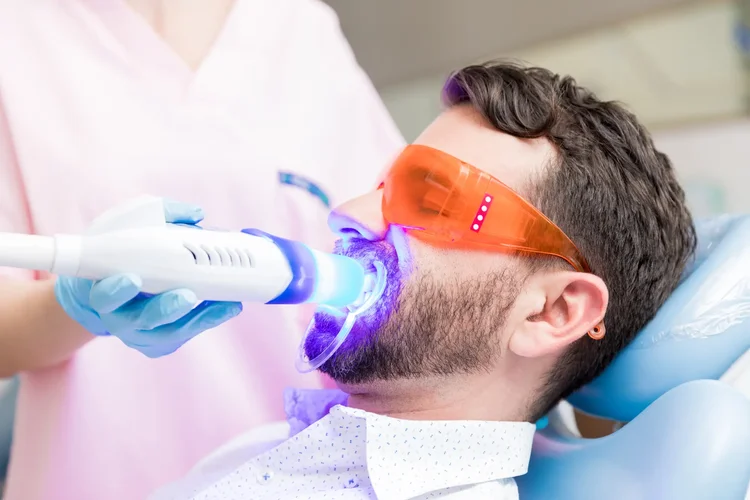
Professional whitening uses peroxide-based whitening agents to break down stain molecules inside the enamel. This makes the tooth shade appear lighter without removing tooth structure.
Surface stains may also need to be removed with teeth cleaning and dental hygiene before whitening. If tartar or plaque is covering the enamel, whitening gel cannot work evenly across the tooth surface. That is why many patients get better results when cleaning is done before whitening.
When Coffee Stains Need Professional Treatment
Coffee stains may need professional care when they do not improve with brushing or using top whitening toothpastes. Stains that sit between teeth, near the gums, or around old dental work are harder to treat at home.
Professional treatment is also important if there is tooth sensitivity, gum irritation, enamel wear, cavities, or old restorations in visible areas. Whitening does not change the colour of fillings, crowns, veneers, or bonding, so a dentist should check these before treatment.
Best Whitening Options for Coffee Drinkers
The best whitening option depends on how deep the coffee stains are and how sensitive the teeth feel. Mild staining may improve with cleaning and careful at-home care. Darker stains usually respond better to professional whitening.
A dentist may recommend one of these options:
| Whitening option | Best for | Main point |
|---|---|---|
| Professional in-office whitening | Faster shade improvement | Stronger whitening agents are used under dental supervision |
| Custom take-home whitening trays | Coffee drinkers who want controlled whitening | Trays fit the teeth more closely than store-bought products |
| Whitening toothpaste | Light surface stain control | Helps reduce new stains but does not deeply whiten enamel |
| Dental cleaning before whitening | Plaque, tartar, and surface buildup | Helps whitening treatment work more evenly |
| Cosmetic treatment review | Stains around fillings, bonding, crowns, or veneers | Restorations may need polishing or replacement |
Store-bought strips can help with some mild stains, but they may not cover the teeth evenly. They can also irritate the gums if they do not fit well. Coffee drinkers with stronger staining usually get more predictable results from dentist-supervised whitening.
The Barnie’s Coffee website also recommends a special at-home remedy for this, which is made of hydrogen peroxide:
“There are two ways to use hydrogen peroxide to whiten your teeth — as a rinse or as a paste. You can swish equal parts of hydrogen peroxide and water for one minute or mix a small amount of baking soda with a little peroxide to apply directly onto your teeth.”
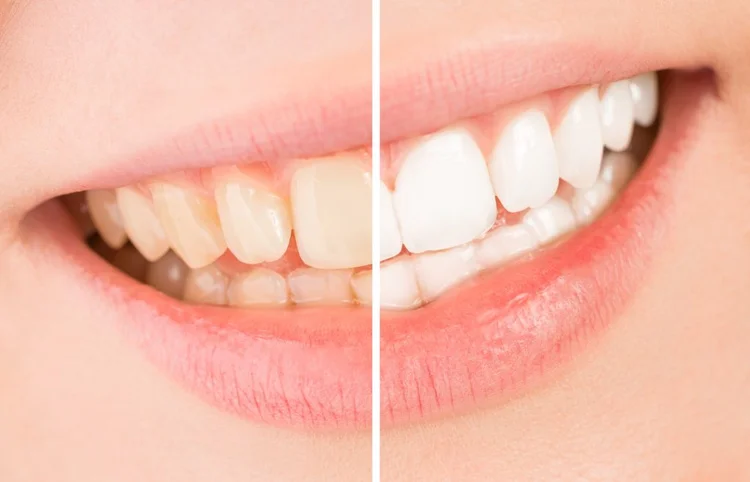
How to Keep Teeth White Without Giving Up Coffee
Coffee drinkers do not always need to stop drinking coffee after whitening. The goal is to reduce how long coffee sits on the teeth and to keep stains from building up.
Helpful habits include:
- Drink coffee in fewer, shorter sessions rather than sipping for hours.
- Rinse with water after coffee.
- Wait before brushing if the mouth feels acidic.
- Brush twice daily with fluoride toothpaste.
- Clean between the teeth daily.
- Keep regular dental cleanings.
- Use whitening toothpaste only as directed.
A straw may reduce contact with the front teeth for iced coffee. For hot coffee, rinsing with water afterward is usually more practical.
Patients who drink coffee daily may also benefit from periodic whitening touch-ups. The timing should be based on tooth sensitivity, enamel condition, and the type of whitening system used.
Read more: Tooth Whitening Options
What to Avoid After Teeth Whitening
The first 24 to 48 hours after whitening are important because teeth may be more likely to pick up stains. Coffee is one of the main drinks to limit during this period.
After whitening, it is best to avoid:
- Coffee and dark tea
- Red wine
- Cola and dark soft drinks
- Tomato-based sauces
- Soy sauce and dark curries
- Smoking or vaping products
- Strongly coloured mouth rinses
If coffee is hard to avoid, drink it in one sitting and rinse with water afterward. Brushing immediately after acidic drinks is not ideal because enamel may be temporarily softened. Waiting before brushing helps protect the enamel surface.
When to See a Dentist for Coffee Stains
See a dentist if coffee stains do not improve with brushing, whitening toothpaste, or routine oral care. A dental visit is also important if staining appears suddenly, affects one tooth more than the others, or comes with sensitivity.
A dentist can check for enamel stains, tartar buildup, tooth decay, gum recession, and older restorations that no longer match the surrounding teeth. If whitening is appropriate, the dentist can recommend the safest strength and treatment schedule.
For deeper discoloration or cosmetic concerns, cosmetic dentistry options in Ancaster may be discussed. This may include whitening, polishing, bonding replacement, veneers, or crown updates, depending on the cause of the colour change.
Still Dealing With Coffee Stains?
Coffee stains do not have to control the colour of your teeth. Contact Wilson East Dental Care to book a whitening consultation and find out which whitening option is suitable for your teeth, enamel, and coffee habits.
Conclusion
Teeth whitening for coffee drinkers can work well, but daily coffee habits can bring stains back over time. The best results usually come from clean enamel, dentist-supervised whitening, and simple stain-control habits after treatment.
Wilson East Dental Care can assess coffee staining, check tooth and gum health, and recommend a whitening option that fits the condition of your teeth. Patients can rely on the clinic for safe whitening guidance and practical advice for keeping their results brighter between visits.
FAQ
These answers address common concerns coffee drinkers often have before and after whitening treatment.
-
Can coffee-stained teeth be whitened?
Yes. Most coffee stains can be improved with professional whitening, especially when the teeth are cleaned first. Deep stains may need dentist-supervised treatment for a more even result.
-
How long after teeth whitening can I drink coffee?
Many dentists recommend avoiding coffee for 24 to 48 hours after whitening. After that, rinsing with water after coffee can help reduce new staining.
-
Does whitening toothpaste remove coffee stains?
Whitening toothpaste can help reduce light surface stains. It does not whiten deeper enamel discoloration the same way professional whitening can.
-
How often should coffee drinkers whiten their teeth?
It depends on stain level, sensitivity, enamel condition, and the whitening method used. Some patients need occasional touch-ups, while others may need a longer interval between treatments.
-
Can coffee make teeth yellow again after whitening?
Yes. Coffee can stain teeth again after whitening, especially with daily sipping and poor plaque control. Good oral hygiene and regular cleanings help slow the return of stains.


