

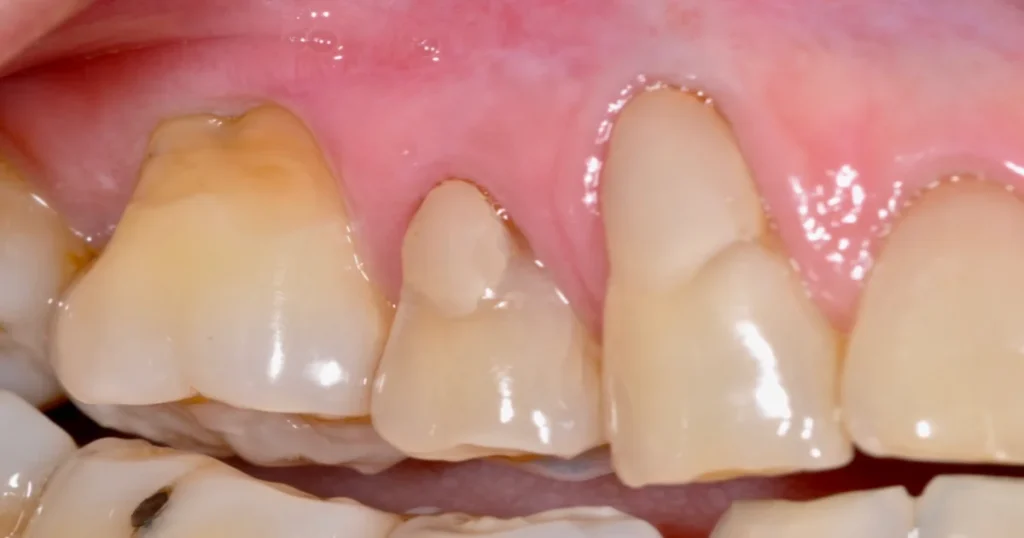
If you’ve noticed a yellow or darker area near your gumline, or searched online for an “exposed tooth root picture, you’re not alone. Seeing what appears to be part of a tooth suddenly uncovered can be alarming, especially when it involves sensitivity or discomfort. The good news is that exposed tooth roots are common, often manageable, and rarely an emergency when treated early for gum disease.
In this guide, we’ll explain what an exposed tooth root actually is, how to recognize it, what causes it, and when it’s time to see a dentist for treatment and prevention.
What Is an Exposed Tooth Root?
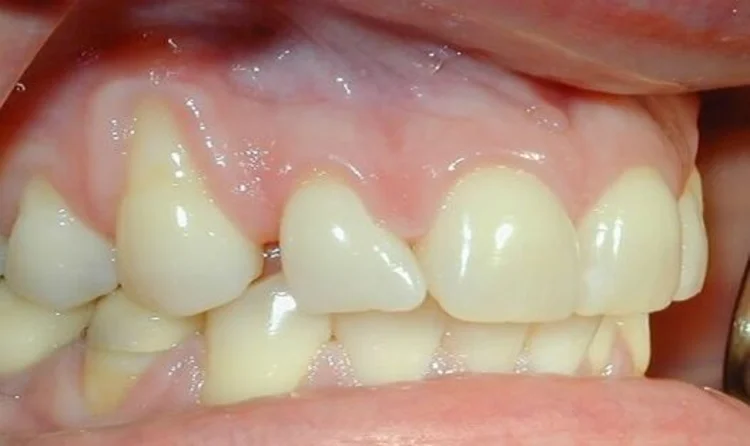
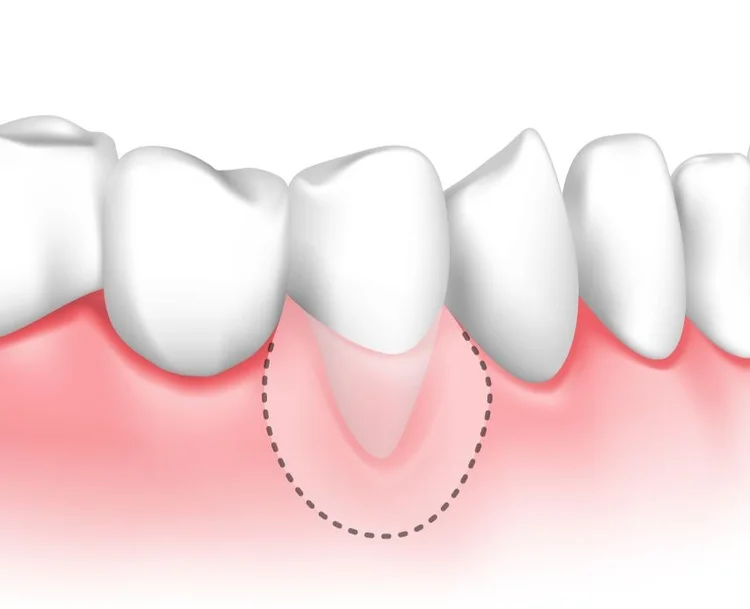
An exposed tooth root occurs when the gum tissue recedes, revealing the tooth’s root. Unlike the crown, which is protected by hard enamel, the root is covered by a softer material called cementum. Cementum wears away easily, making exposed roots more vulnerable to sensitivity, decay, and irritation.
Root exposure is often linked to gum recession, which can develop gradually due to brushing habits, bite forces, or underlying periodontal disease. While the condition itself isn’t always painful, it does increase the risk of discomfort and future dental problems if left untreated.
What Does an Exposed Tooth Root Look Like?
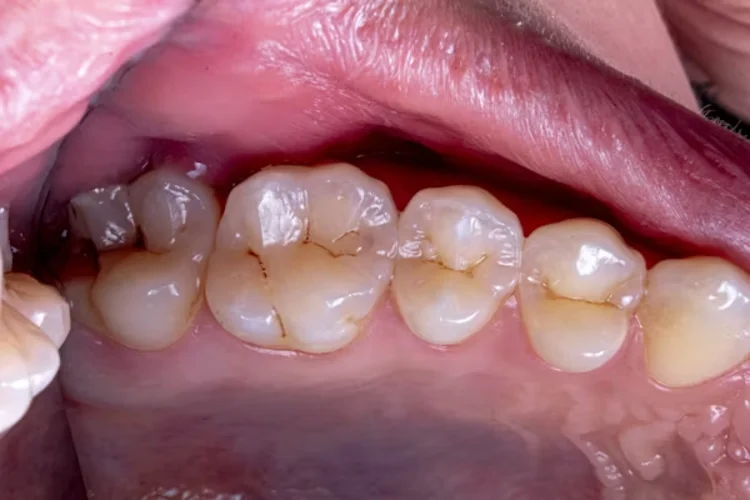
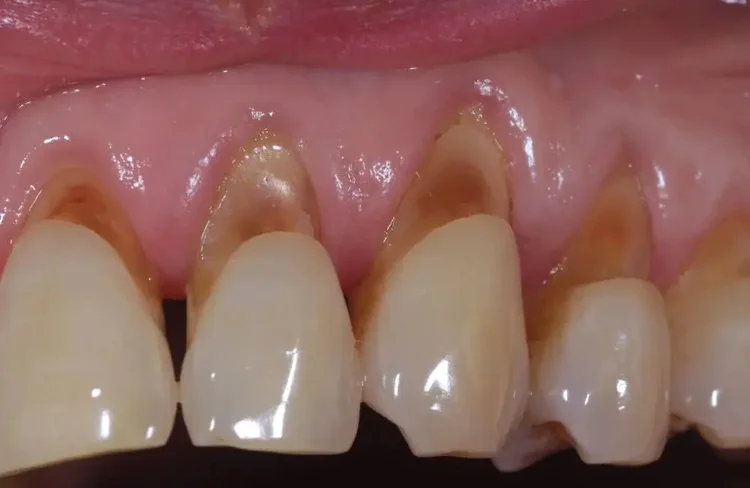
Visually, an exposed tooth root looks different from the rest of the tooth. It typically appears yellow, beige, or darker than the enamel above it. The tooth may appear longer than its neighbors, especially near the gumline.
In some cases, the exposed area has a matte or dull appearance rather than the shiny enamel surface. This color difference is often what prompts people to search for comparison images online, even before symptoms develop.
Here is also what Medical News Today says about exposed vs. unexposed roots:
“If a root is exposed due to gum recession, the gums may look uneven, with some teeth having less gum tissue than others. There may also seem to be gaps or pockets between the teeth and gums.”
Visual Signs to Watch For
Beyond color changes, several visual clues may indicate root exposure. You might notice the gumline sitting lower than before or appearing uneven between teeth. The exposed area may look worn, slightly indented, or more porous than the surrounding tooth surface. In advanced cases, plaque buildup near the root becomes more noticeable because the area is more complex to keep clean.
These changes often appear gradually, which is why regular dental checkups are essential for early detection.
Read more: Most Common Dental Problems
Not Sure If What You’re Seeing Is An Exposed Tooth Root?
Book an exam at Wilson East Dental Care for a professional evaluation and clear treatment options.
Schedule your appointment online today.
Common Causes of Tooth Root Exposure
Tooth root exposure usually develops gradually and is often the result of multiple contributing factors rather than a single cause. Identifying the underlying reason is essential for choosing the right treatment and preventing further gum recession.
- Gum recession caused by periodontal disease:
Chronic gum inflammation leads to the breakdown of supporting gum tissue and bone, exposing the root surface. Without timely gum disease treatment, recession often progresses, increasing the risk of root decay and sensitivity. - Aggressive or improper brushing habits:
Brushing with excessive pressure, using hard-bristled toothbrushes, or scrubbing horizontally can wear down gum tissue over time. This mechanical trauma is one of the most common non-disease-related causes of exposed roots. - Teeth grinding and clenching (bruxism):
Constant grinding places excessive force on teeth and surrounding tissues, accelerating gum recession and enamel wear. Patients with untreated bruxism often benefit from teeth grinding management, such as protective night guards, to reduce ongoing damage. - Long-term plaque and tartar buildup near the gumline:
Hardened plaque irritates gum tissue and encourages recession. This buildup commonly occurs in hard-to-clean areas, underscoring the importance of routine teeth cleaning and dental hygiene. - Natural anatomy or genetic predisposition:
Some individuals naturally have thinner gum tissue or lower bone density, making them more prone to recession even with good oral hygiene and gentle brushing. - Acid erosion from diet or reflux:
Frequent exposure to acidic foods, beverages, or gastric acid can weaken enamel and cementum, increasing the risk of root exposure when combined with gum recession. - Previous orthodontic movement or bite issues:
Teeth that have shifted out of their ideal bone position may place stress on the gums, increasing the likelihood of gum recession over time.
Understanding these causes allows dentists to address not only the exposed root itself but also the underlying condition driving the problem, helping preserve gum health and prevent recurrence.
When to See a Dentist for Exposed Roots
You should see a dentist if the exposed area becomes sensitive to cold, sweets, or brushing, or if it appears to be increasing in size. Discomfort, bleeding gums, or visible plaque buildup around the root are also signs that professional care is needed.
Treatment depends on severity. Mild cases may improve with desensitizing treatments, fluoride applications, or improved brushing techniques. A more advanced recession may require periodontal care, such as scaling and root planing, or, in severe cases, gum grafting to protect the root and restore gum coverage. Early intervention helps avoid the need for more complex procedures later.
Read more: Benefits of Fluoride
Know When to Act After an Exposed Tooth Root Picture
An exposed tooth root can look concerning, especially when it appears darker or suddenly noticeable near the gumline. While it isn’t usually an emergency, it does signal that the tooth needs attention and protection to prevent sensitivity, decay, or further gum recession.
At Wilson East Dental Care, we evaluate gum health, identify the cause of root exposure, and provide personalized treatment, from preventive care to advanced periodontal solutions. If you’re concerned about changes near your gumline, our team is here to help protect your smile and prevent future complications.
FAQ
-
Is an exposed tooth root an emergency?
No, it’s usually not an emergency, but it should be evaluated promptly to prevent sensitivity or decay.
-
Why is the exposed tooth root yellow or darker than the tooth?
The root is covered by cementum, which is naturally darker and less reflective than enamel.
-
Does an exposed root always cause pain or sensitivity?
Not always. Some people notice visual changes first, while others experience sensitivity to cold or sweets.
-
Can brushing too hard cause root exposure?
Yes. Aggressive brushing with excessive pressure is one of the most common causes of gum recession and root exposure.
Have you noticed a dark or yellow area near your gumline?
Share your experience or questions below


