


Dental anesthesia makes procedures such as dental fillings, root canals, wisdom tooth extraction, and emergency dentistry more comfortable by temporarily blocking pain signals. Patients often worry, however, about how long the numbness will last, how soon they can eat, and whether tingling or swelling is normal. Fortunately, anesthesia follows predictable patterns, and most aftereffects fade without complications.
This guide explains how dental anesthesia works, the typical duration for different procedures, factors that influence numbness, and evidence-based ways to help sensation return safely.
How Dental Anesthesia Works and Why Numbness Happens
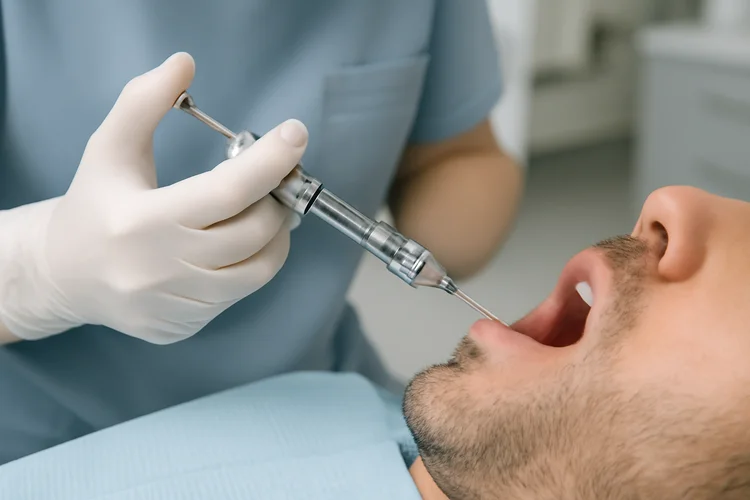
Dental anesthesia interrupts nerve communication so pain signals cannot reach the brain during treatment. Local anesthetics, such as lidocaine or articaine, diffuse into the surrounding tissues and temporarily “freeze” the area being treated. This affects the tooth being worked on as well as nearby lips, cheeks, tongue, or chin, depending on the nerve involved.
Dentists use different anesthetic techniques based on the procedure and tooth location. For example, fillings for cavities, gum treatment, or cosmetic work on front teeth typically require only small, localized injections, while deeper procedures may require broader nerve blocks. Because the anesthetic temporarily limits soft-tissue sensation, patients commonly feel heaviness in the cheeks, difficulty speaking clearly, or mild swelling, none of which indicates a problem.
Read more: What Is Laughing Gas
How Long Dental Anesthesia Typically Lasts
Most patients regain normal sensation within 1 to 3 hours, though some procedures may require numbing that lasts longer. The duration depends on the tooth being treated, anesthetic choice, and the depth of the procedure.
Duration Based on Procedure
Different dental treatments require different anesthetic depths and therefore produce different numbness windows:
- A simple filling or minor restorative procedure generally results in 1–2 hours of numbness.
- A root canal, which involves deeper nerve treatment, may produce numbness lasting 2–4 hours.
- Tooth extraction, including wisdom teeth removal, often requires longer-lasting anesthesia that can last 3–5 hours.
- Emergency dental procedures, when infection or severe inflammation is present, may require repeated doses, prolonging the duration of numbness.
Throughout the return-to-normal phase, mild tingling or warming sensations are expected.
Nerve Block vs. Local Infiltration
Some procedures require freezing a large nerve, while others freeze only a small, localized area. Here is a clear, patient-friendly breakdown:
| Feature | Nerve Block | Local Infiltration |
|---|---|---|
| Where anesthesia is placed | Near a major nerve supplying an entire region (often the lower jaw) | Directly around the tooth being treated |
| Area affected | Entire side of lower lip, chin, and multiple teeth | One or two teeth and nearby gum tissue |
| Commonly used for | Lower molars, extractions, root canals, dental emergencies | Upper teeth, small fillings, cosmetic bonding |
| Typical numbness duration | 3–5 hours | 1–2 hours |
| Advantages | Effective for deep or widespread procedures | Faster recovery, less soft-tissue numbness |
| Limitations | Longer soft-tissue numbness; may affect speech temporarily | Not ideal for lower molars or severe pain cases |
Because the lower jaw requires more profound anesthesia, patients receiving nerve blocks often worry about prolonged numbness of the lip or chin. This sensation is normal and usually fades within the expected timeframe.
Read more: Tips to Help You Stay Calm at the Dentist
Factors That Affect How Long Numbness Lasts
Numbness duration varies widely among individuals, partly due to biological differences and partly due to the type of anesthetic used. Patients with faster metabolism often experience shorter-lasting anesthesia, while those with inflammation, such as during dental emergencies or infected teeth, may require more substantial or repeated doses. The chemical composition of the anesthetic also matters; some, like articaine, wear off more quickly, while others, like bupivacaine, are formulated to last significantly longer.
Age can also play a role. Children often metabolize anesthetics more quickly, but they may also be more sensitive to soft-tissue numbness, especially after procedures involving family dentistry or pediatric restorative care.
Take a look at this quote by the Healthline website:
“Anesthetics work in different ways depending on what’s used. Anesthetics can be short-acting when applied directly to an area or work for longer times when more involved surgery is required.”
Read more: Dental Implant Sedation Options
Still Numb Longer than Expected?
Contact Wilson East Dental Care for reassurance and expert guidance.
Call 289-277-6440 or schedule your appointment online.
When to Expect Longer or Shorter Numbness Times
Some situations naturally influence how long numbness lasts after dental anesthesia. Understanding these patterns helps you know what’s normal and when to follow up with your dentist.
- More prolonged numbness is expected after deeper or nerve-based treatments:
Procedures such as root canal therapy, complicated tooth extractions, or treatment for severe dental infections require stronger anesthesia placed near major nerves. This often results in several hours of soft-tissue numbness in the lips, chin, and cheeks. - Nerve blocks prolong numbness by design:
The anesthetic is deposited near the inferior alveolar nerve to freeze an entire quadrant. This is common with lower-jaw treatments and can result in altered sensation lasting 3–5 hours. - Inflammation or infection can affect the duration of numbness:
During dental emergencies, infected tissues may require multiple injections because anesthetic diffuses less effectively. This can extend numbness beyond the usual window. - Shorter numbness occurs with simpler procedures:
Minor dental fillings, small cosmetic repairs, or upper-tooth treatments often require only local infiltration, which wears off more quickly, typically within 1–2 hours.
If numbness lasts beyond 6–8 hours or you experience unusual symptoms such as facial drooping or persistent tingling, contact your dentist promptly for evaluation.

How to Safely Ease the Aftereffects of Dental Anesthesia
There is no instant reversal for dental anesthesia, but several safe and effective strategies promote circulation and help numbness fade more comfortably.
- Use a warm (not hot) compress on the area once swelling is stable:
Gentle warmth boosts blood flow, helping your body metabolize residual anesthetic more efficiently. Avoid heat immediately after oral surgery if swelling is present. - Move your jaw lightly to improve circulation:
Talking, swallowing, smiling, or performing small jaw movements can naturally speed up the return of sensation—especially after fillings, dental crowns, or cosmetic work. - Stay hydrated to support anesthetic metabolism:
Drinking water helps your body process anesthetic agents and reduces the duration of lingering numbness. Proper hydration is especially helpful after lengthy or multi-step procedures, such as root canal treatment. - Avoid chewing until full sensation returns:
Chewing while numb can cause accidental lip, tongue, or cheek injuries. This is particularly important for children after pediatric fillings or extractions—they often bite soft tissues without realizing it. - Avoid hot food and drinks until feeling returns:
Because numb tissue cannot gauge temperature, burns are a common post-anesthesia injury. Stick to cool or room-temperature foods initially.
Using these techniques helps patients recover more comfortably, especially after procedures involving restorative dentistry, extractions, or more profound anesthesia.
Support Your Healing After Learning About Dental Anesthesia
Dental anesthesia is predictable, safe, and essential for comfortable dental care. Most numbness fades within a few hours, and simple steps can help ease the transition back to normal sensation. Understanding what to expect reduces anxiety and helps patients navigate recovery with confidence.
At Wilson East Dental Care, we provide comfortable, stress-free procedures, including fillings, extractions, emergency care, and restorative treatments, with personalized guidance throughout your recovery. If numbness ever feels prolonged or unusual, our team is here to help.
FAQ
-
Why does dental anesthesia last longer for some procedures?
Deeper treatments like extractions or nerve-based procedures require stronger anesthesia, which naturally lasts longer.
-
Can I speed up the natural wearing off of numbness?
Warm compresses, hydration, and gentle movement help, but anesthesia still needs time to metabolize.
-
Is it normal to feel tingling as sensation returns?
Yes, tingling is a typical sign that nerves are recovering, and blood flow is returning to the area.
-
How long does anesthesia last for children?
Most children regain sensation within 1–3 hours, but close supervision is essential to prevent accidental lip or cheek biting.
How long does dental anesthesia usually last for you?
Share your experience or questions below
Our team is here to help you understand what’s normal and what isn’t.


