

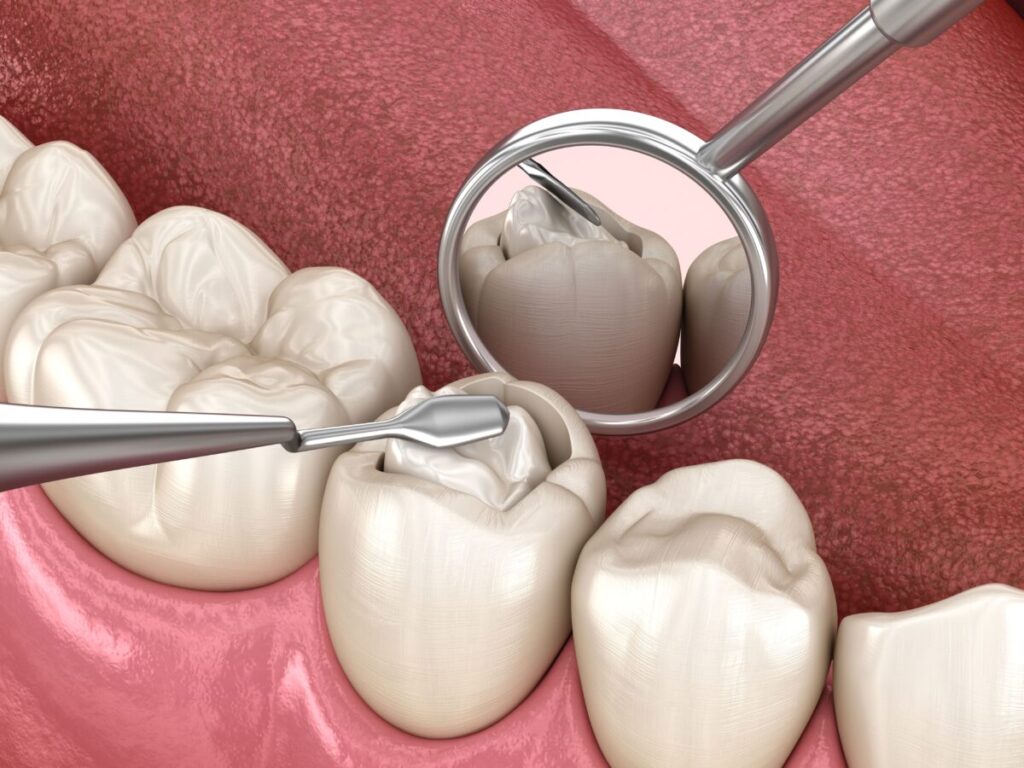
What Are Dental Fillings?
Dental fillings are a common and effective way to repair teeth damaged by decay or minor fractures. They not only restore the tooth’s appearance but also play a key role in preventing further damage. Without timely treatment, a damaged tooth can worsen, potentially leading to more serious issues like infections or the need for root canals or crowns.
Let’s explore the most common types of dental fillings and their benefits:
Most Common Types of Dental Fillings
When choosing a dental filling, it’s important to recognize that different materials serve different purposes. The ideal filling depends on several factors, including the tooth’s location, the extent of decay, your budget, any existing allergies, and your aesthetic preferences. Let’s take a closer look at the most common types of dental fillings available.
1. Gold Fillings
Pros:
-
long-lasting: Gold fillings are extremely durable, lasting 10 to 15 years or even longer.
-
No corrosion: They don’t corrode over time, making them a long-term option.
-
Unique look: Some people prefer the unique look of gold fillings, which can symbolize quality and strength.
Cons:
-
Cost: Gold fillings are more expensive than other materials.
-
Multiple visits: The process typically requires more than one dental visit for custom fitting.
-
Convenience: If you’re looking for a quick, budget-friendly solution, gold may not be the best option.
2. Silver Amalgam Fillings
Pros:
- Durability: These fillings last 10 to 15 years, similar to gold.
- Affordability: They are less expensive than gold or composite fillings.
- Strength: Ideal for molars, silver amalgam withstands heavy chewing forces.
Cons:
- Appearance: Silver fillings are more noticeable, which might not suit those concerned about aesthetics.
- Tooth structure: More of the tooth structure needs to be removed compared to other filling types.
3. Tooth-Colored Composite Fillings
Pros:
- Natural look: Composite fillings can be matched to the color of your natural teeth, making them perfect for visible areas.
Cons:
- Durability: They may not last as long as silver amalgam fillings, especially in larger cavities.
- Cost: Composite fillings can be more expensive.
- Time-consuming: The process can take longer and may require multiple visits.
4. Ceramic Fillings
Pros:
-
Durability: Made from porcelain, ceramic fillings can last up to 15 years or more.
-
Stain resistance: They resist staining, which is great for maintaining appearance over time.
Cons:
-
Expensive: Ceramic fillings are often as expensive as gold fillings.
-
Brittleness: While strong, they can be more prone to chipping or cracking compared to composites.
5. Glass Ionomer Fillings
Pros:
- Fluoride release: These fillings release fluoride, helping to protect the tooth from further decay.
- Best for specific cases: They’re especially useful for fillings below the gum line or in children’s teeth.
Cons:
- Durability: Glass ionomer fillings typically last about five years or less.
- Not resistant: They aren’t as resistant to wear, limiting their use in areas that endure heavy chewing.
Thinking About a Filling? Get in Touch with Wilson East Dental
If you think you might need a filling or just want to ensure your teeth are in the best possible condition, don’t hesitate to reach out to us. We’re here to provide the expert care you need in a friendly and relaxed setting. Contact Wilson East Dental today to schedule your appointment and take the next step toward a healthier smile.
The Dental Filling Process: What to Expect
Getting a dental filling is a straightforward procedure, though the specifics may vary depending on the type of filling material. Here’s a general overview:
- Numbing: The dentist will numb the area around the tooth with a local anesthetic to ensure a pain-free experience.
- Decay removal: The decayed portion of the tooth is removed using a drill, laser, or air abrasion tool.
- Cleaning: The cavity is cleaned to remove any remaining bacteria or debris. If the decay is near the nerve, a special liner may be applied to protect it.
- Filling placement: The chosen material is placed into the cavity. For composite fillings, this involves layering the material and hardening each layer with a curing light.
- Finishing touches: The dentist shapes and polishes the filling for a smooth surface and a comfortable bite. Some sensitivity to hot or cold may occur after the procedure, but this should subside within a few days.
After getting a filling, maintaining good oral hygiene—regular brushing, flossing, and dental check-ups—is crucial to ensure the longevity of the filling and overall dental health.
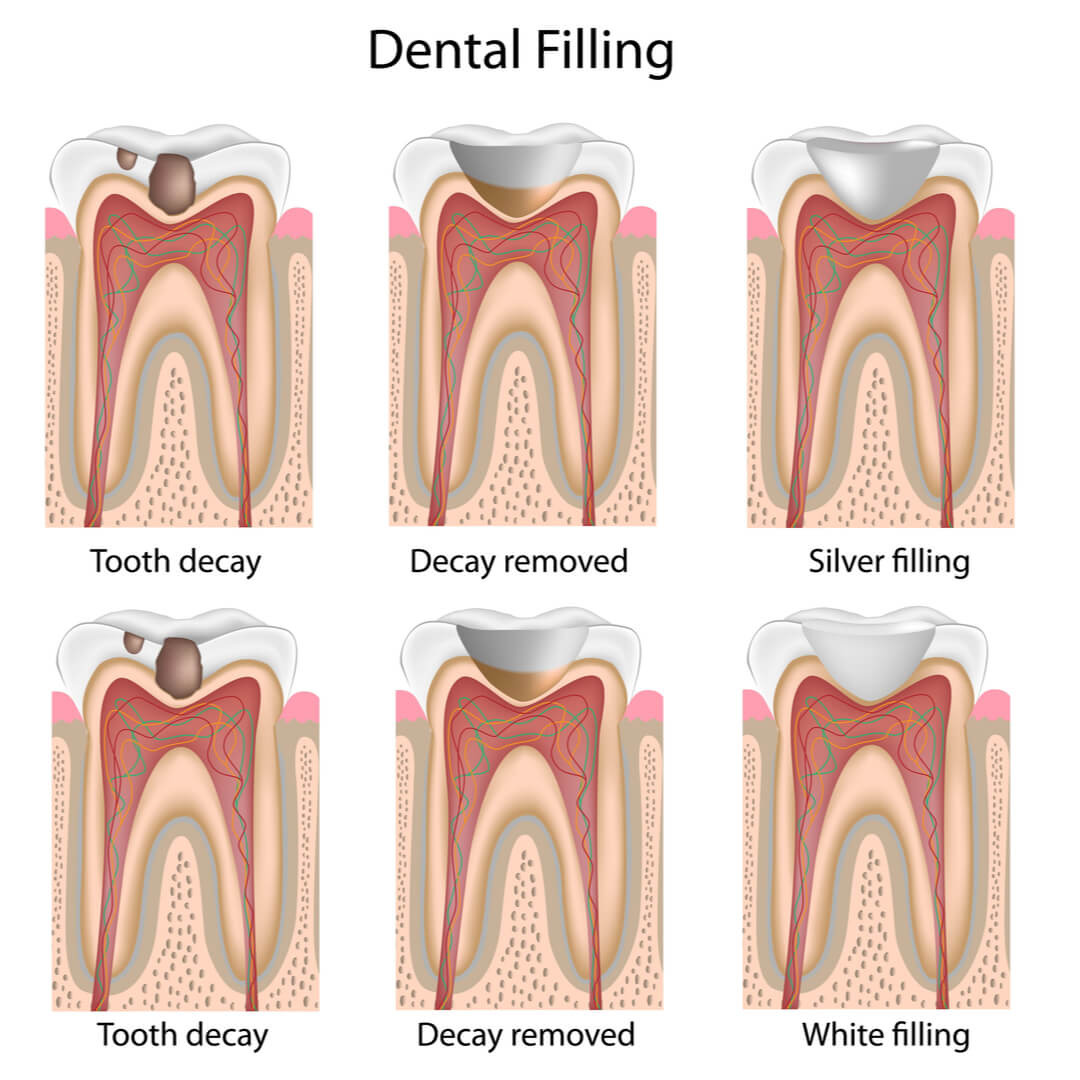
What are the probable difficulties of dental fillings?
After a dental filling operation, it’s expected that you undergo little teeth sensitivity and gum soreness in the area. These side effects are temporary and should go away in a week or two.
Difficulties that may need additional remedy are less expected, but may include:
- A throbbing toothache. This could mean that wreckage reached your toothpump. You may need root canal therapy.
- Pain when biting down. This type of pain can happen if your new filling hampers with your bite. Your dentist can repair this by reshaping your filling.
- Pain in reaction to heat or cold. If you have severe pain that remains after something hot or cold touches your tooth, it might indicate the nerve inside your tooth is injured. You may need a root canal or tooth extraction.
Can I eat or drink after a filling?
Technically, you can eat or drink whatever you want shortly after your operation is done. It won’t hurt your new filling. But postponing until the numbness wears off can keep you from accidentally biting the inside of your cheeks. If you want to eat something right away, chew slowly and be careful.
Dental Filling Costs
The cost of a dental filling varies depending on the size of the cavity, the location of the tooth, and the type of filling material used:
- Silver Amalgam Fillings: Around $150 per filling without insurance.
- Composite Fillings: Typically $200 to $300, depending on complexity.
- Gold Fillings: Among the most expensive, costing several hundred dollars per filling.
- Ceramic Fillings: Similar in cost to gold fillings.
- Glass Ionomer Fillings: Less expensive than composite or ceramic fillings but may require more frequent replacement.
Check Your Insurance Coverage
It’s always a good idea to check with your insurance provider beforehand to understand what is covered and what your out-of-pocket expenses will be.
Bottom line
Dental fillings help restore tooth holes. Dentists utilize them to “load” spots of damage or decay. There are several kinds of fillings, including amalgam and tooth-colored options like composite resin and porcelain. Depending on the material used, some dental fillings can stay up to 20 years.
Other expressions for dental fillings include:
- Tooth fillings.
- Cavity fillings.
- Dental restorations. (This word refers to a spectrum of treatments that repair teeth, like fillings, inlays, onlays, bridges, and crowns.)
Your dentist can examine treatment options with you and decide which type of dental filling is better for your situation.
Why Choose Wilson East Dental for Your Fillings?
At Wilson East Dental, we take the time to explain all your options so you can make an informed decision. We use the latest technology and techniques to ensure your fillings are durable, functional, and aesthetically pleasing. Whether you prefer the natural look of composite fillings or the long-lasting durability of gold, we’ll help you find the best solution for your dental needs.
Beyond fillings, we offer a full range of dental services, from preventive care to cosmetic and restorative treatments.
Contact us today to schedule your appointment and take the next step toward a healthier smile.


