

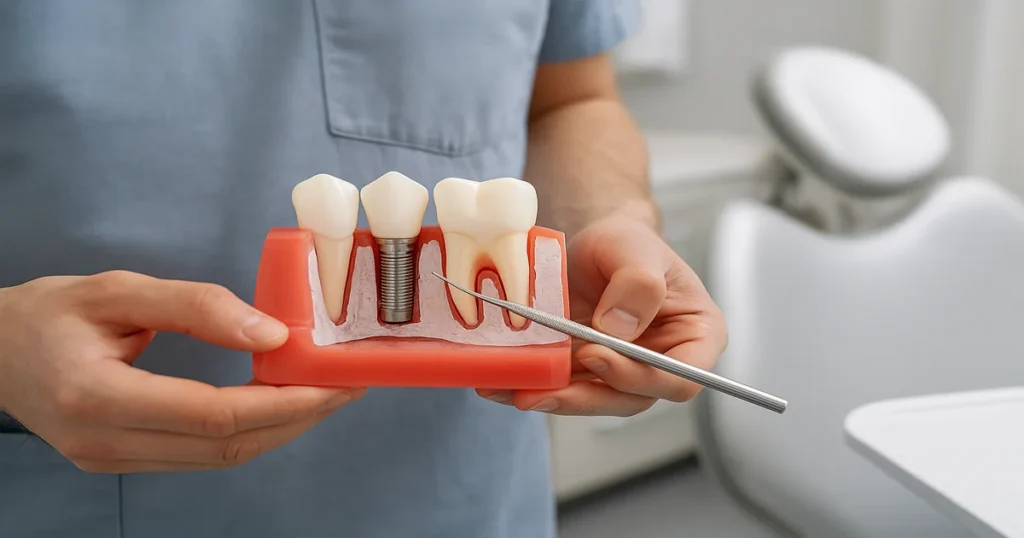
Dental implants are a durable, natural-looking solution for missing teeth, restoring chewing ability, speech, and aesthetics. They act as artificial roots, integrating with the jawbone to support crowns, bridges, or full-arch restorations. Dental Implants not only improve function but also enhance self-esteem and confidence, especially when combined with cosmetic dentistry like veneers or smile makeovers.
In this article, we’ll explore all types of dental implants: single, multiple, and full-mouth implants, the differences between endosteal and subperiosteal implants, and the procedures that support successful placement, including bone augmentation, sinus lifts, and ridge expansion. We’ll also discuss advanced options like mini implants, immediate-load implants, and All-on-4 systems, as well as factors to consider when selecting the right implant for your smile.
Dental Implant Types and Applications
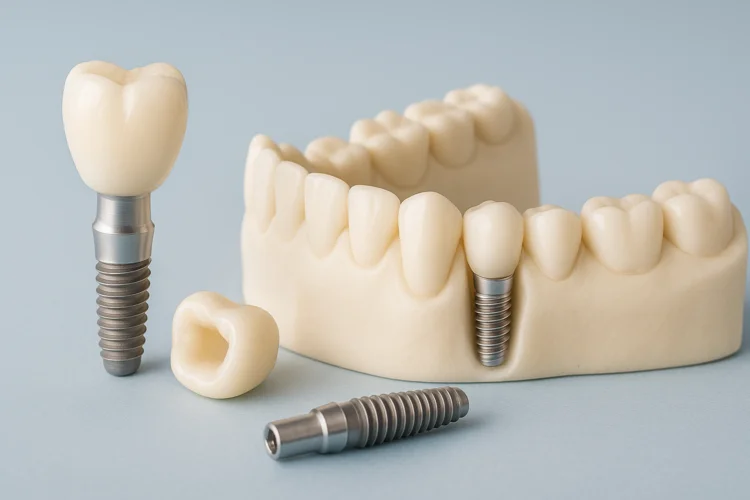
Dental implants provide versatile solutions for replacing missing teeth, ranging from a single tooth to a full arch. Understanding the different implant types, how they function, and which procedures support them is essential for patients seeking long-term oral health, function, and aesthetics. Different types of dental implants can be combined with cosmetic dentistry treatments like veneers, dental crowns, or smile makeovers to achieve a natural, confident smile while restoring chewing ability and jawbone health and also knowing the process of getting dental implants matters
Single-Tooth Implants
Ideal for replacing one missing tooth, single-tooth implants restore both function and appearance. They are surgically placed into the jawbone and topped with a crown. These implants help maintain surrounding teeth, prevent bone loss, and can be integrated with cosmetic enhancements for a seamless, natural look.
Multiple-Tooth Implants
For patients missing several adjacent teeth, multiple implants support a bridge or series of crowns. This approach stabilizes the restoration, prevents shifting of remaining teeth, and preserves jawbone integrity. Pairing multiple implants with teeth whitening or cosmetic procedures can enhance overall aesthetics and patient satisfaction.
Full-Mouth Implants (All-on-4)
Full-arch replacements, including All-on-4 implants, provide a permanent solution for patients missing all teeth in an upper or lower jaw. Four strategically placed implants support temporary teeth initially, followed by permanent restorations after healing. This solution restores chewing function, improves facial structure, and boosts confidence, often integrated with smile makeover treatments for optimal results.
Endosteal Implants
Placed directly into the jawbone, endosteal implants are shaped like screws or cylinders and are the most common type. They can support single, multiple, or full-arch restorations. These implants are highly stable and can work alongside restorative dentistry procedures like crowns or bridges.
Subperiosteal Implants
Subperiosteal implants sit on top of the jawbone, beneath the gum tissue, instead of within the bone. They are recommended for patients with insufficient bone for endosteal implants or who wish to avoid bone grafting. These implants often support partial dentures or multiple crowns and restore function effectively.
Mini Dental Implants (MDIs)
Mini implants are smaller, less invasive, and ideal for stabilizing dentures or in cases of limited bone availability. They are easier to place, require less recovery time, and can provide immediate support for lower dentures or small dental restorations.
Read more: Why Choose Implant-Supported Dentures Over Traditional Ones
Immediate-Load (Same-Day) Implants
Also called “teeth in a day,” these implants allow placement of temporary teeth during the same appointment. They reduce waiting time, restore function quickly, and are suitable for patients seeking rapid cosmetic and functional improvement.
Zirconia Implants
Zirconia implants are metal-free, biocompatible, and highly aesthetic, blending naturally with surrounding teeth. They are ideal for patients with metal sensitivities or high cosmetic demands and can be combined with treatments like veneers or smile makeovers for a fully integrated restorative solution.
Supporting Procedures to Ensure Successful Implant Placement
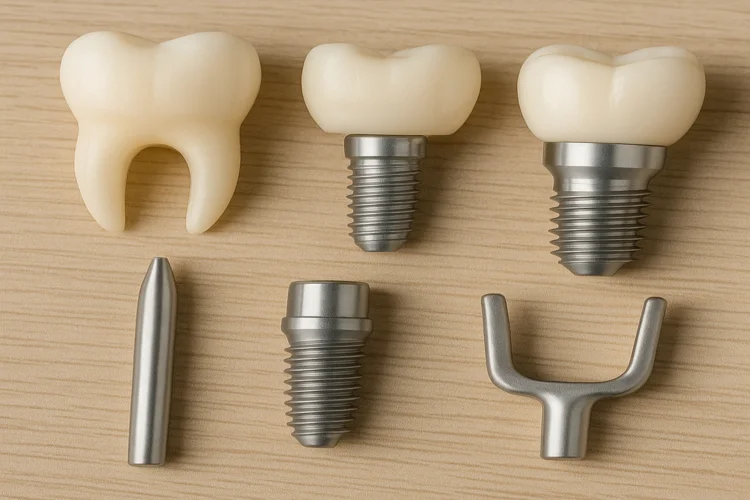
For some patients, placing dental implants (doesn’t matter which types of dental implants) requires additional procedures to prepare the jaw and surrounding tissues for optimal results. These supporting treatments ensure that implants are stable, function properly, and integrate seamlessly with other restorative or cosmetic procedures.
- Bone Augmentation: When the jawbone lacks sufficient density or volume, bone augmentation restores or regenerates the area to provide a strong foundation for implants. This can involve bone grafts or growth factors to encourage natural bone growth, improving implant stability and long-term success.
- Sinus Lifts: In the upper jaw, limited bone near the sinus cavity can restrict implant placement. A sinus lift, also called sinus elevation or sinus augmentation, raises the sinus floor to create enough space for secure implant placement, reducing the risk of complications and enhancing comfort.
- Ridge Expansion or Modification: Narrow jaw ridges can prevent proper implant placement. Ridge expansion or modification adds bone to widen the ridge, creating a stable base for implants while also subtly improving facial structure and symmetry.
These procedures are typically coordinated with restorative dentistry and preventive dental care to ensure not only a successful implant but also long-term oral health, durability, and aesthetic outcomes. Proper planning and integration of these supporting treatments increase the likelihood of a smooth recovery and lasting results.
Factors to Consider When Choosing an Implant
When deciding on a dental implant, consider:
- Bone density and jaw health
- Number of missing teeth
- Material preference (titanium vs. zirconia)
- Long-term durability and aesthetics
- Oral hygiene and maintenance requirements
Discussing these factors with an experienced cosmetic dentist ensures that implants are integrated seamlessly with other treatments like veneers, crowns, or dental bonding, achieving both functional and aesthetic goals.
According to FDA:
“Your overall health is an important factor in determining whether you are a good candidate for dental implants, how long it will take to heal, and how long the implant may stay in place.”
Read more: Who isn’t a good candidate for dental implants?
Restore your smile with expert guidance from Wilson East Dental Care
Call us today or book an appointment online to explore personalized implant options that work the best for you based on your condition.
Feel Confident Choosing Between the Types of Dental Implants
Dental implants restore function, aesthetics, and confidence, making them a long-term solution for missing teeth. Understanding the types of implants, supporting procedures, and patient-specific factors is key to achieving optimal results.
At Wilson East Dental Care, our skilled team offers comprehensive implant solutions tailored to your needs. From consultation to placement and follow-up, you can rely on our expertise to restore your smile with precision, comfort, and long-lasting results.
FAQ: Types of Dental Implants
Here are answers to common questions about dental implants to help you make an informed choice.
-
What are the main types of dental implants?
Endosteal, subperiosteal, mini implants, immediate-load, and All-on-4/All-on-6 implants, each suited for specific needs.
-
Who is a good candidate for dental implants?
Patients with healthy gums and sufficient jawbone; some may require bone augmentation or sinus lifts.
-
How long do dental implants last?
With proper care, implants can last decades or even a lifetime.
-
Do implants require special maintenance?
Yes, maintain implants like natural teeth with brushing, flossing, and regular dental visits.
-
What is the recovery time for implants?
Healing usually takes a few months before permanent restorations are placed.
Do you have questions about dental implants or want to share your experience?
Comment below, and our dental team will provide professional advice.


