

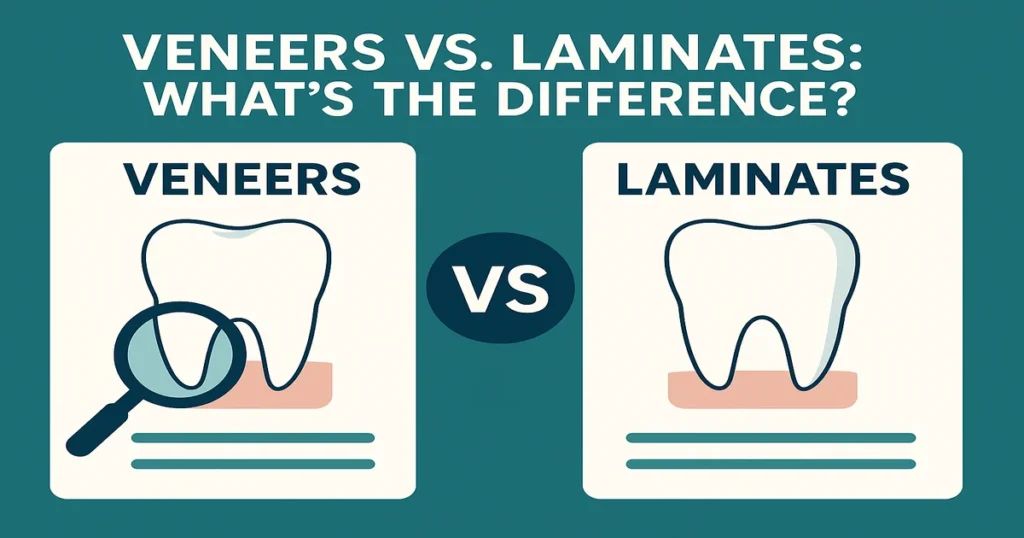
At a glance, veneers and laminates may seem like the same thing; they’re both ultra-thin shells bonded to your teeth to enhance appearance. However, the key difference lies in thickness, tooth preparation, durability, and cost. Veneers often involve more tooth preparation and offer stronger, longer-lasting results, while laminates are thinner, minimally invasive, and ideal for minor cosmetic corrections. Choosing the right option depends on your dental goals, budget, and desired aesthetic outcome.
In this article, we’ll explain what veneers and laminates are, compare them across key factors like tooth preparation, longevity, aesthetics, and cost, and discuss when dentists recommend each option. By the end, you’ll know which solution best suits your needs and how to achieve a lasting, beautiful smile.
What Are Dental Veneers?
Dental veneers are thin shells, typically made from porcelain or composite resin, that are bonded to the front surface of teeth. They are used to correct discoloration, chips, gaps, or misalignment, creating a uniform and aesthetically pleasing smile, just like other cosmetic dentistry procedures. Traditional veneers usually require the removal of a small amount of enamel to ensure proper fit and adhesion. Porcelain veneers are highly durable, stain-resistant, and offer a natural translucency that closely mimics real teeth, making them a popular choice for complete smile makeovers.
There are many types of veneers on the market, which differ by material and durability. The point is that the kind of veneer you choose is also essential, whether you’re looking for a long-term fix or just a transient one.
Read more: Interesting About Dental Veneers

What Exactly Are Dental Laminates?
Dental laminates are ultra-thin shells applied to teeth, often made of porcelain or composite materials. Unlike traditional veneers, laminates require minimal or no enamel removal, making them a minimally invasive cosmetic option. Laminates are excellent for correcting mild discoloration, minor chips, or subtle spacing issues, providing a natural look with less commitment than full veneers.
You should also know that they are often preferred by patients who want a quick aesthetic improvement to their smile and oral health without the more extensive preparation required for veneers.
Key Differences Between Veneers and Laminates
These are the key differences between veneers and laminates that are essential to know in the process of decision-making and choosing one of them for yourself or one of your family members:
Thickness & Tooth Preparation
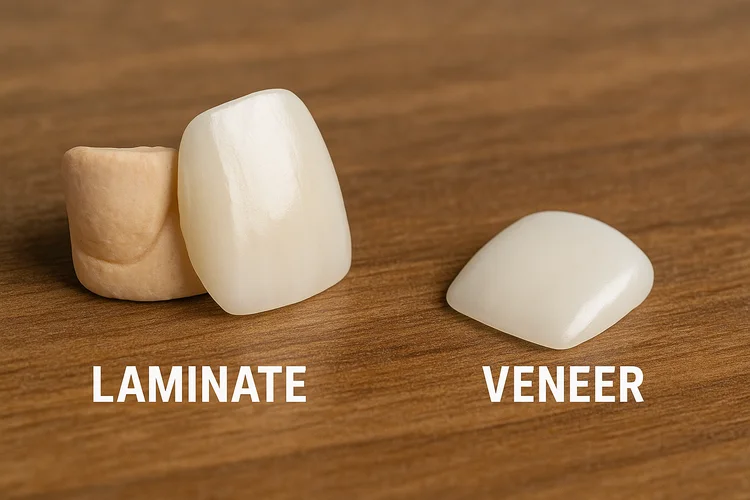
Veneers are typically 0.5–1 mm thick and require some enamel removal to ensure a proper fit. Laminates are ultra-thin, around 0.2–0.5 mm, and can often be applied without significant enamel reduction, preserving the natural tooth structure. This makes laminates ideal for patients seeking minimally invasive dentistry.
Also, you must know that before you get veneers, you need to prepare your teeth for the procedure. This is also known as teeth prepped for veneers, which is a very important point to consider.
Durability & Longevity
Veneers are generally more durable, lasting 10–15 years or more with proper care, especially porcelain veneers. Laminates are slightly less robust, with a lifespan of 5–10 years, depending on material and oral hygiene. The thicker material and stronger bonding of veneers make them better suited for correcting alignment or structural issues.
Aesthetic & Stain Resistance
Both veneers and laminates offer excellent aesthetics, but porcelain veneers provide superior translucency and a natural tooth-like appearance. They are highly stain-resistant, while laminates, though aesthetically pleasing, may be slightly more prone to staining over time, especially if made from composite resin. Dentists often recommend veneers when a long-lasting, high-end aesthetic outcome is desired.
Cost & Procedure Time
Veneers typically cost more due to their material quality and lab fabrication. The procedure usually requires 2–3 dental visits. Laminates are more cost-effective and can often be completed in 1–2 visits, making them a convenient choice for minor cosmetic improvements. Your dentist can guide you based on budget, desired results, and the complexity of your smile makeover.
Read more: Teeth Bonding vs. Veneers
Veneers or Laminates which one is the best for you?
Want to know which cosmetic dental option, veneers or laminates, is right for you?
Contact us for a consultation and personalized treatment plan to achieve your dream smile.
When Dentists Recommend Laminates or Veneers
Dentists recommend veneers for patients with significant discoloration, chipped teeth, gaps, or mild misalignment. They are ideal for long-term aesthetic corrections and structural reinforcement. Laminates are recommended for minor cosmetic improvements, like slight discoloration, small chips, or minimal spacing issues, particularly when patients want to preserve tooth enamel. Your dental professional will evaluate your oral health, smile goals, and bite alignment to determine the best option.
As you may know, in today’s world, the decisions of people have bent towards veneer because they are mostly recommended by a massive percentage of dentists all around the world, the Biomatj website says:
“Veneer is a thin sheet of material placed on the facial surface of anterior teeth, for aesthetic purposes and protection. It is a thin layer of restorative material that replaces the enamel. Veneers are the restoration of choice for a conservative and esthetic approach as they give the patient a perfect smile.”

Which Option Should You Choose?
Deciding between veneers and laminates depends on how dramatic you want the results to be and how much tooth alteration you’re comfortable with. The comparison below highlights the key differences to help you choose the option that aligns best with your goals.
| Decision Factors | Veneers | Laminates |
|---|---|---|
| Best For | Patients seeking a dramatic, transformative smile makeover | Patients wanting subtle cosmetic refinements |
| Aesthetic Impact | Corrects deeper discoloration, reshapes teeth, and improves minor alignment | Enhances appearance without major structural changes |
| Tooth Preparation | Requires enamel reduction | Preserves natural tooth due to ultra-thin design |
| Durability & Stain Resistance | Strong, long-lasting, and highly stain-resistant | Less durable and less resistant to stains compared to veneers |
| Suitability for Dental Issues | Ideal for severe discoloration, chips, and alignment corrections | Not suitable for major discoloration, chips, or alignment problems |
| Treatment Experience | More involved procedure with greater modification | Minimally invasive with shorter appointments |
| Cost Consideration | Higher investment but greater long-term return | Lower overall cost for those seeking conservative enhancement |
Ultimately, the right choice comes down to your aesthetic priorities, dental condition, and treatment expectations. A professional assessment will determine which option delivers the most natural, durable, and satisfying outcome for your smile.
Find the Perfect Smile With Veneers or Laminates
Both veneers and laminates can transform your smile, but they serve slightly different purposes. Veneers are thicker, more durable, and suitable for comprehensive cosmetic corrections, while laminates are ultra-thin, minimally invasive, and ideal for subtle improvements. Understanding these differences ensures you make an informed decision aligned with your dental goals.
You can rely on Wilson East Dental to guide you in choosing the perfect solution for your smile. Whether you’re considering veneers for long-lasting durability or laminates for a minimally invasive aesthetic touch, our expert dentists provide personalized recommendations and treatment plans to achieve the results you desire.
FAQ
-
Are laminates just a type of veneer?
Yes, laminates are thin, minimally invasive veneers often used for subtle cosmetic corrections.
-
How much tooth enamel is removed for veneers vs laminates?
Veneers usually require 0.5–1 mm of enamel removal, while laminates often require minimal or no enamel removal.
-
How long do veneers last compared to laminates?
Porcelain veneers typically last 10–15 years, while laminates last 5–10 years, depending on care and material.
-
Which is more expensive: veneers or laminates?
Veneers are generally more expensive due to material strength, durability, and lab fabrication costs. Laminates are more cost-effective.
-
Is the procedure for laminates less painful than for veneers?
Yes, laminates are less invasive and usually involve minimal or no enamel removal, making the procedure more comfortable for patients.
Have questions about veneers vs laminates?
Leave a comment below and let us help you choose the perfect option for your smile makeover!


