


Losing teeth changes how you look, speak, and eat, and dentures are often the simplest, most reliable way to restore function and confidence. The Canadian Dental Care Plan (CDCP) was created to reduce the cost barrier to dental care for eligible Canadians who don’t have private dental insurance. For people who need full or partial dentures, the CDCP can pay a portion of the lab and professional fees, and it sets clear rules about which denture types are covered, how often they can be replaced, and when preauthorization is required.
In this blog, we’ll cover everything you need to know about how the CDCP covers dentures. First, let’s start with the types of dentures that are covered.
Types of Dentures Covered
The CDCP groups denture services into a few clear categories: complete (full) dentures, removable partial dentures, immediate or transitional dentures, and overdentures. Below, we explain each type, how the CDCP treats them, and what to expect.
1. Complete Dentures
Complete (or full) dentures replace all teeth in an arch (upper or lower). In the table below, you can check different types of complete dentures that you can get through the CDCP.
| Complete Denture Type | Explanations |
| Standard complete dentures | These are routine full dentures and do not require preauthorization; they are covered once per arch every 96 months. |
| Transitional/provisional complete dentures | Short-term or temporary dentures are covered once in a lifetime per arch and do not require preauthorization. |
| Immediate complete dentures & complete overdentures | These do require preauthorization before placement because they are more complex or are provided immediately after extractions. The plan also notes that some long-term soft liners on dentures require preauthorization. |
2. Partial Dentures
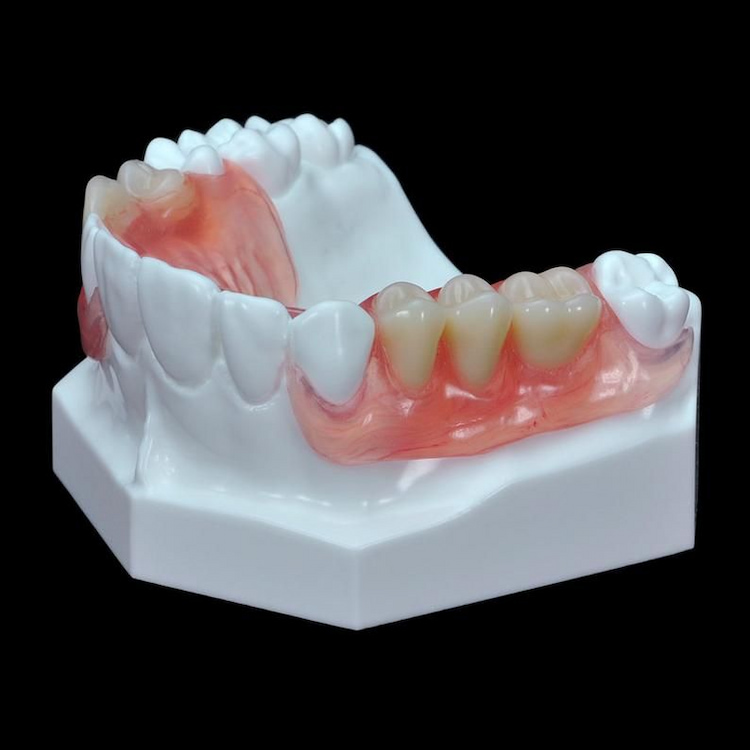
Partial dentures replace one or more missing teeth while keeping the remaining natural teeth. Removable partial cast dentures (metal framework) are usually treated as “cast” partials and are covered once per arch every 96 months (8 years); initial placements require preauthorization.
Also, removable partial acrylic dentures are covered once per arch every 60 months (5 years). For this type, the initial placements also require preauthorization in many cases.
The CDCP also sets specific eligibility rules for partials (like which tooth numbers qualify and the condition of abutment teeth) and requires documentation, such as radiographs, photos, and treatment plans, when asking for reauthorization.
3. Immediate and Overdentures
Immediate dentures are made in advance and inserted the same day teeth are removed. Therefore, they often require preauthorization and have special billing rules. For example, the fee includes tissue conditioner but not a processed reline.
Overdentures (dentures that fit over remaining roots or implants) are more complex. They usually need preauthorization and are assessed carefully because implants and many implant procedures are excluded from CDCP coverage.
Quick Comparison Table: What to Expect
| Denture type | What it is | CDCP notes (coverage & rules) | Replacement frequency |
| Standard complete denture | Full-arch prosthesis | No preauthorization required; covered per arch under frequency rules | 1 per arch every 96 months. |
| Transitional/provisional complete denture | Short-term/full-arch temporary | No preauthorization; lifetime limit | 1 per arch in a lifetime. |
| Immediate complete denture | Inserted same day as extractions | Requires preauthorization; special lab/fee rules | Counted in the 96-month rule for replacements. |
| Partial cast denture | Metal framework partial | Initial placement requires preauthorization; replacement rules apply | 1 per arch every 96 months. |
| Partial acrylic denture | Acrylic removable partial | Initial placement requires preauthorization; different frequency | 1 per arch every 60 months. |
Contact Us Today!
Thinking about dentures under the CDCP? Book a free CDCP eligibility check and denture consultation with Wilson East Dental. We’ll review your needs, explain any preauthorization steps, and create a care plan that fits CDCP rules and your lifestyle. Call our clinic or use our online booking to reserve time with a denturist or dentist experienced with CDCP claims.
Additional Services Related to Dentures
According to Canada.ca, some additional services that are related to dentures are covered. Knowing this helps you make an informed decision about your treatment and budget.
Repairs and Adjustments
Denture repairs, such as broken acrylic, clasp repairs, or small lab fixes, and routine adjustments are an important part of keeping dentures comfortable and safe. Under the CDCP, repairs and additions do not normally require preauthorization and are covered within a set frequency (limited to 1 per prosthesis in any 12 months). That means small fixes soon after the plan rules usually cover delivery, but always confirm with your provider before work starts.
Relines and Rebases
Relines and rebases keep a denture fitting well as your mouth changes. They are covered, generally without preauthorization, but they do have frequency limitations (for example, 1 per prosthesis in any 24 months). If you’re getting a reline shortly after delivery or a reline has been done recently, it can affect eligibility for replacement under the frequency rules.
Explore your various smile makeover options by checking out this article: The Best Cosmetic Dentistry Options for Seniors
Eligibility and Preauthorization
The CDCP’s denture coverage is tied closely to a patient’s financial eligibility and service approval requirements. Knowing both aspects will help you avoid delays and surprise costs. This section explains how income levels affect your coverage percentage and why certain denture services require preauthorization before treatment begins.
Income-Based Coverage Levels
CDCP is designed for Canadians without private dental insurance and with an adjusted family net income below $90,000. Eligible applicants must have filed taxes and meet the program criteria. Also, please note that the amount CDCP reimburses for a service depends on the service type and the client’s income level; in that the plan usually covers a portion of the CDCP-established fee and clients may be responsible for a co-pay depending on their income bracket and the cost of treatment.
Additional Note: When you apply or renew your CDCP coverage through My Service Canada Account (MSCA), you’ll be asked for recent tax info (Notice of Assessment) so the program can determine your adjusted family net income and the co-pay that applies.
Suggested article: Am I Eligible for the Canadian Dental Care Plan?
Preauthorization Process
Preauthorization is the CDCP’s way of reviewing more complex or higher-cost services before they’re done. When it comes to preauthorization, there are a few important things to know.
When is it required?
Initial placements of certain removable partial dentures, immediate dentures, overdentures, some complete dentures (non-standard types), and some other major services need preauthorization. Preauthorization must be requested before the service is performed.
How does it happen?
Your dentist or denturist completes a preauthorization submission using a standard claim/treatment form and includes required documents, such as treatment plan, radiographs or photos, notes about extractions, etc. The CDCP, which is administered operationally with Sun Life support, reviews the clinical information and confirms whether it will pay for the requested service.
What is the timing?
The program responds to preauthorization requests in a timely way. Because responses depend on clinical review, some approvals take longer. Since 2024, the CDCP has expanded the preauthorization process to accept requests for additional services, making it easier to request coverage for more complex care.
Accessing Denture Services
The CDCP is only as useful as your ability to find and use a participating provider. Access means both locating a clinic that works with the plan and knowing the steps to get an appointment.
How to Find a Participating Provider
Only CDCP-participating providers should submit claims directly to Sun Life on your behalf. Participating providers include licensed dentists, denturists, dental hygienists, dental specialists, and dental schools. Providers can sign up with Sun Life or submit claims directly on a claim-by-claim basis. Since participation is voluntary, it’s better to always confirm with your chosen clinic that they will bill CDCP (Sun Life) directly and accept the CDCP billing rules.

Suggested article: How to Check Your Canadian Dental Care Plan Application Status Online
Scheduling Appointments
Let’s check the steps you should take, from confirming to visiting the clinic:
- Register or sign in to My Service Canada Account (MSCA) and ensure your application is active for the period when you’ll receive care.
- Call or book with a CDCP-participating clinic. Tell them you have CDCP coverage and what treatment you need; ask whether preauthorization is required.
- Your provider will submit the required forms and diagnostics to CDCP/Sun Life. Wait for approval before complex work begins.
- On the day of treatment, bring your MSCA client number or documentation, your photo ID, and any dental records you have. Your provider will bill CDCP; if a co-pay applies, you’ll be charged the remainder at the clinic.
Final Word
The Canadian Dental Care Plan has opened doors for many Canadians to access high-quality dentures without the full financial burden. Now that you know the types of dentures covered, the frequency limits, and the importance of preauthorization, you can make informed decisions about your care. At Wilson East Dental, we believe every patient deserves a confident, comfortable smile, and with CDCP coverage, that goal is closer than ever!
If you think you may be eligible for dentures under the CDCP, don’t wait. Contact Wilson East Dental today to schedule your consultation, confirm your eligibility, and start your treatment. Moreover, you can rely on our team’s help for other cosmetic dental treatments and paving the way to get a beautiful smile!
FAQs
-
Are flexible dentures covered under CDCP?
Flexible dentures aren’t listed as a separate CDCP category. Coverage depends on how they’re billed and the clinical details your provider submits. If you’re considering a flexible thermoplastic partial, ask your denturist if it’s eligible and whether preauthorization is needed.
-
How often can I get new dentures through CDCP?
You can get complete dentures 1 per arch every 96 months (transitional/provisional complete dentures are a separate lifetime allowance). Partial cast dentures are available 1 per arch every 96 months. Also, you can get partial acrylic dentures 1 per arch every 60 months.
-
Do I need preauthorization for denture repairs?
Generally no. Repairs and additions usually do not need preauthorization and are limited to set frequencies (repairs/additions 1 per prosthesis in any 12 months). But confirm with your provider as unusual lab work or significant modifications might need review.
-
What if my dentures need adjustment soon after fitting?
Adjustments are covered; the CDCP recognizes the need for adjustments after insertion. If multiple adjustments or a reline occur close to a replacement request, the program may consider treatment history when assessing eligibility for replacement.
-
Can I choose any denturist for services under CDCP?
You can choose any licensed denturist or dentist, but the provider must participate in the CDCP to bill CDCP directly. Therefore, you should confirm participation before scheduling and limit your out-of-pocket costs.
Have you used the CDCP for dentures, or are you thinking about applying? Share your experience or questions in the comments; our team loves helping patients navigate the process!


